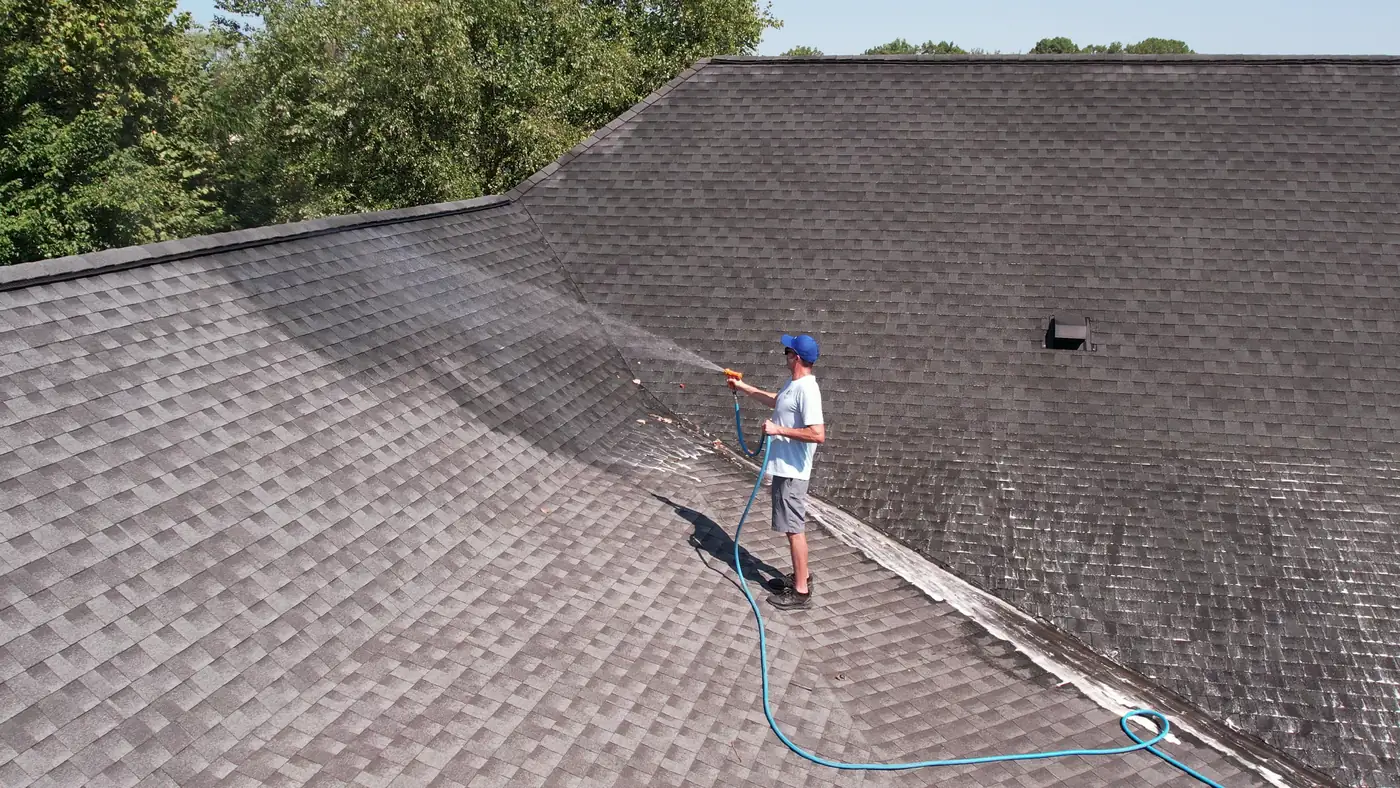
The dark streaks on the roof that weren’t there when you moved in. The driveway that’s gone gray and rough near the street. Neither one means the house is done.
Mount Vernon is a mid-century town. 55% of homes here were built between 1950 and 1979, and only 5% since 2000, the smallest share of newer homes among the six towns we serve. The median home was built in 1968 (Census Bureau, ACS 2020 to 2024). The house may date to the 1960s, but the roof, the siding and the driveway each run on their own clock. We look at what’s actually there today.
The westernmost city in Indiana
Mount Vernon is the westernmost city in the state, and the Posey County seat. It was first settled in 1806 as McFaden’s Bluff and platted as Mount Vernon in 1816. Down the river, the John T. Myers Locks and Dam sits 13 miles southwest of town.
The Posey County Courthouse Square at 300 Main St. is on the National Register. So is the Mount Vernon Downtown Historic District, roughly bounded by the Ohio River, 6th and Walnut streets, and College Avenue. The Welborn Historic District, the William Gonnerman House, the I.O.O.F. and Barker Buildings, and the Pitcher House are listed as well (National Register listings for Posey County).
Roof cleaning without the pressure washer
Those dark streaks are usually algae, not dirt or moss. They show up first on the slopes that dry slowest after rain, and they keep spreading where the shingles stay damp.
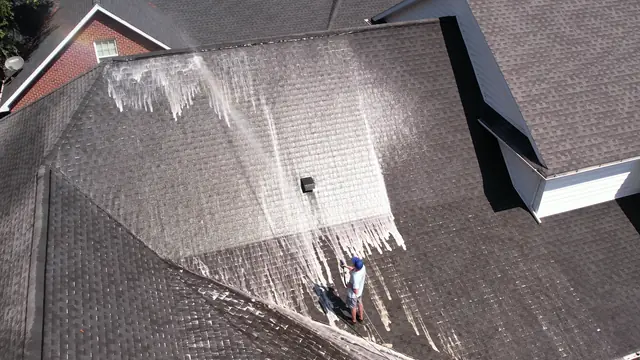
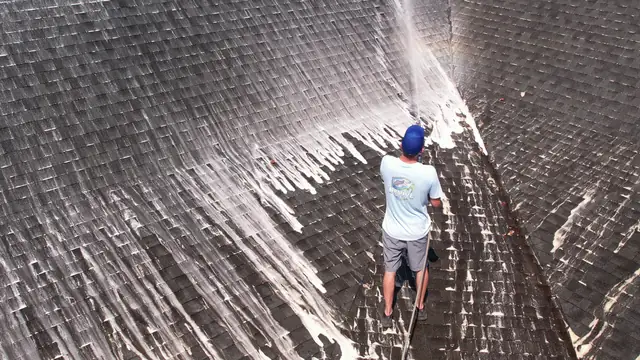
Our roof cleaning is a low-pressure soft wash. We never put a pressure washer, a brush or a broom on the roof. The granules on a shingle shade the asphalt, and InterNACHI says their bond to the asphalt weakens as the shingle ages (InterNACHI). On an older roof, that’s reason enough to go easy.
We also look at the roof before we recommend cleaning at all. And we’ll be straight with you. Algae can grow back over time. That’s why some owners add protection after a wash.
Concrete protection for mid-century driveways
Scaling is the flaking and peeling you see on older concrete. The National Ready Mixed Concrete Association ties it to freeze-thaw cycles and says deicers make it worse. So what you spread in winter matters. If you’re not sure what’s in the bag in your garage, read the label.
NRMCA calls rock salt and calcium chloride acceptable for concrete. It says never to use ammonium sulfate, ammonium nitrate or magnesium-based salts as a deicer, and to use clean sand for traction on newly placed concrete (NRMCA).
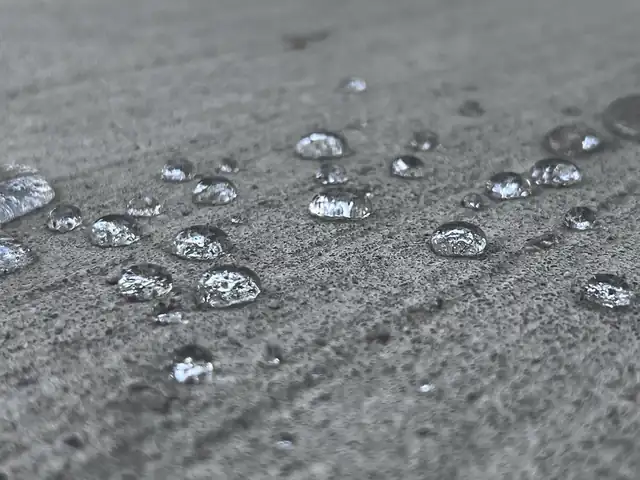
Concrete protection helps your driveway, walks and steps shed water and salt. It won’t stop cracks. NexaNano says its concrete treatment protects “without changing the appearance” of the surface.
What happens next
Down on the Ohio, Mount Vernon gets river humidity in summer and plenty of freeze-thaw nights in winter. Evansville Regional Airport, the closest long-term station, counts about 90 nights at or below freezing in an average year, and on roughly 75 of them it warms back above 32°F the next day (NOAA 1991 to 2020 normals). Every one of those swings works water deeper into old concrete and brick joints. That’s why we start with a cleaning and a close look before we talk about any treatment.
Mount Vernon is about 17.9 miles and 22 minutes from our base. Schedule a free exterior evaluation and we’ll look at the roof, the walls and the concrete, then give you a plain answer. Call or Text Revive Exteriors at (812) 664-6222. Heading back toward the city? See our Evansville page.