
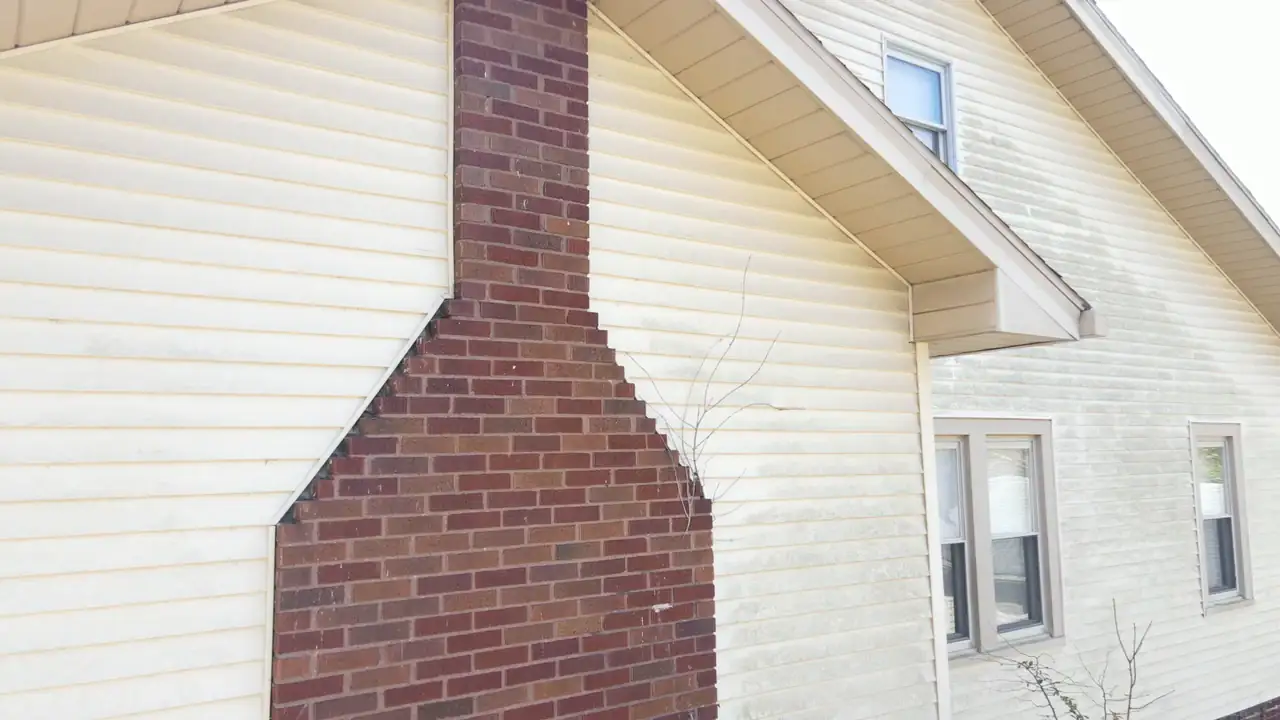
Maybe a mason just finished tuck-pointing your chimney. Maybe you’ve spotted white, chalky stains on the brick, or a few faces flaking off near the top. Either way, you’re looking at masonry that takes rain from every side.
Chimney and masonry sealing is a clear, penetrating treatment we put on brick, block, stone and chimney masonry once it’s in good repair. It’s meant to help the masonry soak up less water. It is not a repair. If the brick or mortar needs work, a mason fixes it first. Then we seal.
Why brick and mortar take on water
Brick, block, stone and mortar are porous. They’re full of tiny pores, and those pores pull water in when rain hits. A chimney gets the worst of it. It sticks up above the roofline with nothing over it.
The Brick Industry Association (BIA) covers this in its technical note on colorless coatings. It says water repellents “can be useful for barrier walls, chimneys, parapets and other brickwork that is particularly vulnerable to water absorption and penetration, especially in climates that receive large amounts of rain.” Evansville gets 47.91 inches of precipitation a year, by NOAA’s 1991 to 2020 normals.
Where does the water actually get in? Often not through the brick itself. BIA says water “usually penetrates brick masonry at separations and cracks between brick and mortar or at junctures with other materials.” Think open joints, hairline gaps, and the line where the chimney meets the roof.
What Evansville winters do to wet masonry
Wet brick is one thing. Wet brick that freezes is another. NOAA’s normals for Evansville Regional Airport count about 90 nights a year at or below 32°F, but only about 16 days that stay below freezing all day. So most of those freezing nights are followed by a thaw. That’s our math on NOAA’s figures, not a measured count.
Water expands when it turns to ice. BIA lists “freezing and thawing deterioration” among the problems caused by too much water getting into brickwork, along with rusting metal ties and mold growth. Less water in the masonry means less water there to freeze.
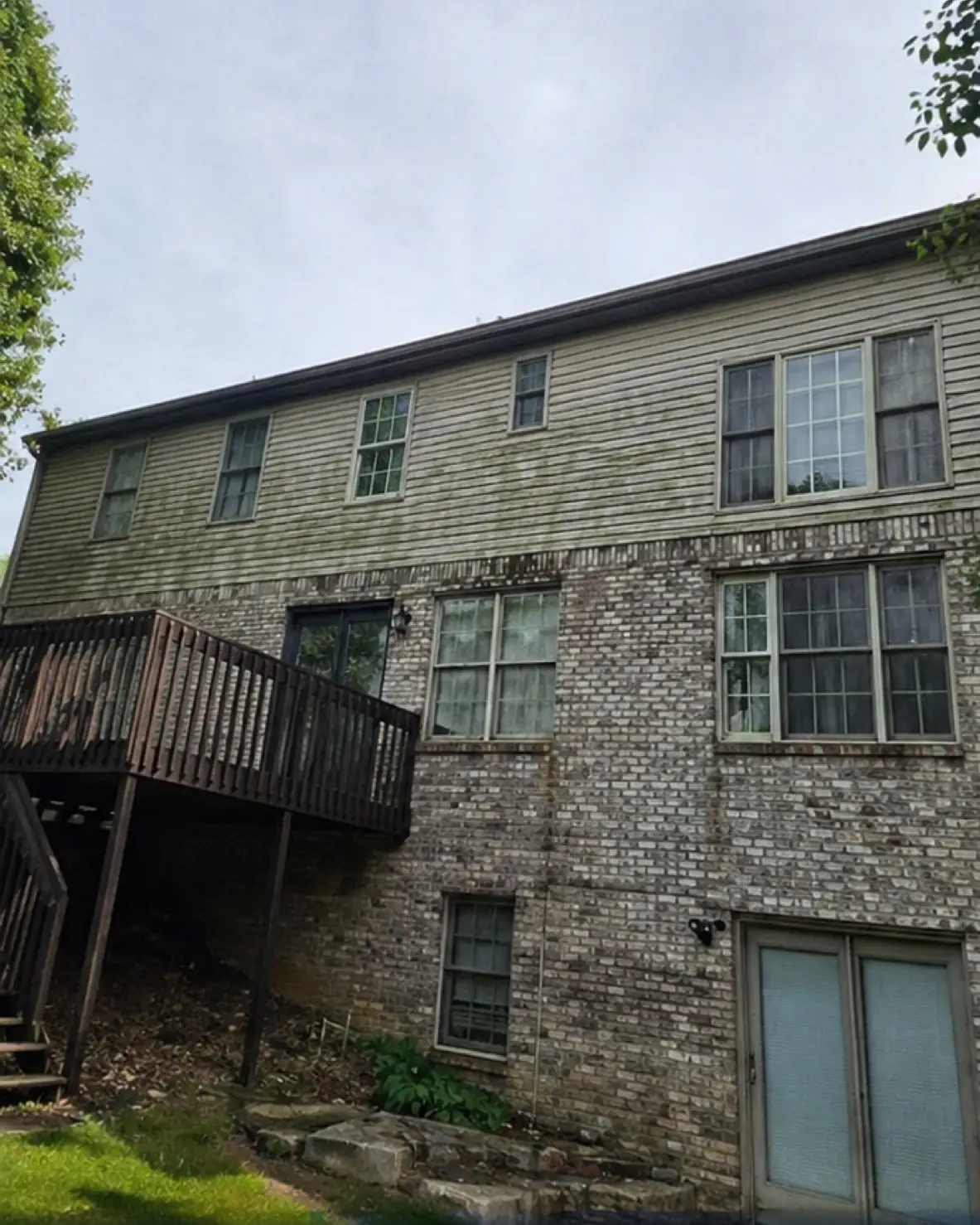 Before
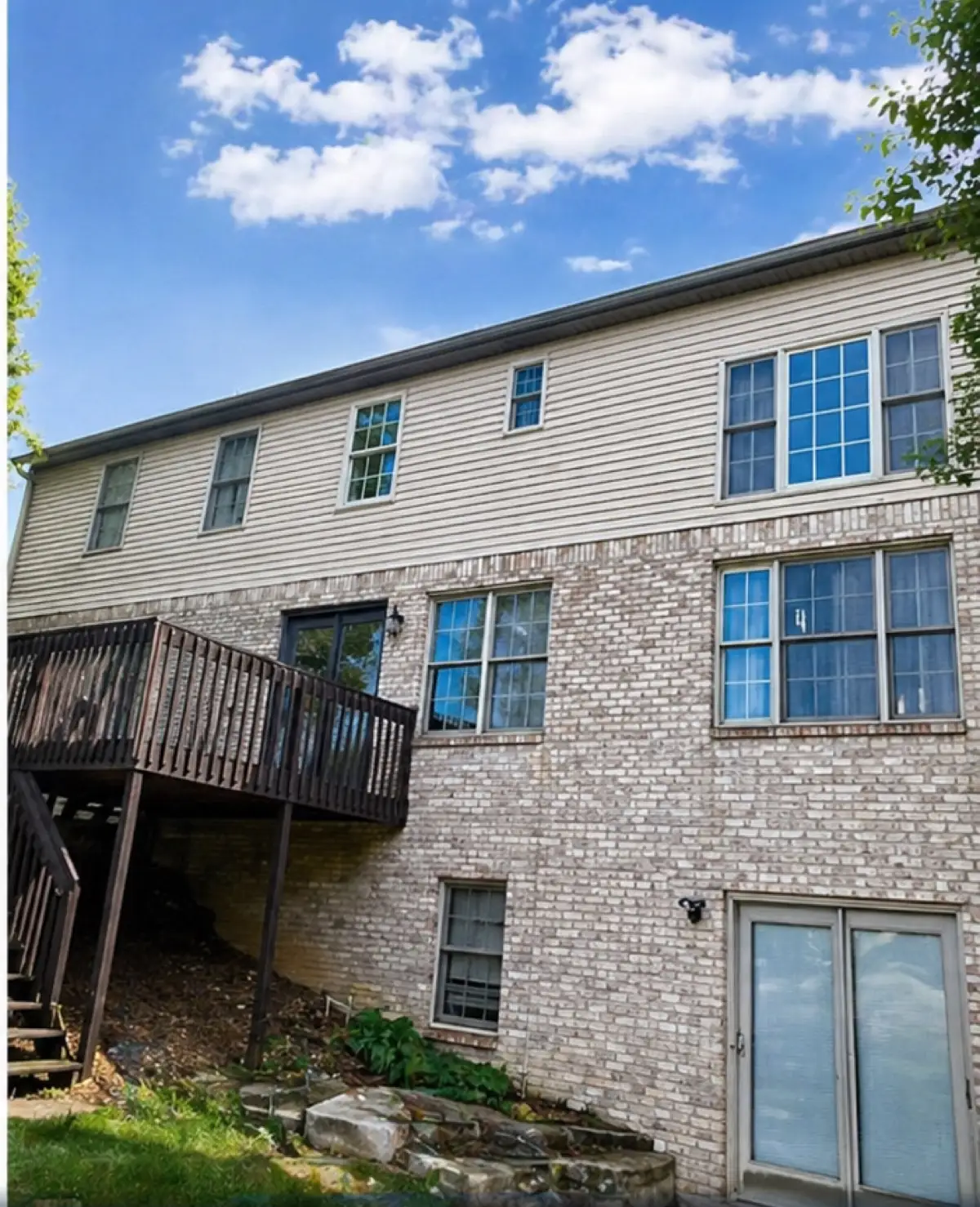 After
What the treatment is
We’re a NexaNano Certified Dealer and Applicator. NexaNano’s FAQ lists brick, stone and masonry among the surfaces its formulas are made for. It describes its products as SiO₂ (silicon dioxide) treatments that soak into porous surfaces and form a breathable protective barrier, instead of a heavy film on top. NexaNano also says the treatment dries clear and keeps the natural look of the material.
Why breathable matters on brick
BIA splits clear coatings into two kinds. Film formers sit on the surface like a skin. Penetrants soak into the pores and leave no film. Film formers slow the drying of water that’s already inside the wall, and BIA says they’re not recommended for brick in places with freeze-thaw cycles. Evansville is one of those places.
Can I read up on the product first?
Please do. Ask us for the data sheet and we’ll show you what NexaNano says about brick and masonry before anything goes on the wall.
Repairs first, then sealing
This is the part we won’t bend on. A clear treatment can’t fix masonry that’s broken. BIA says water repellents “cannot stop water penetration caused by design or construction deficiencies such as ineffective sills, caps or copings, or incompletely filled mortar joints.” It also says the source of the water should be found and the repairs finished before a water repellent goes on.
So here’s the order we follow:
- A mason fixes what’s broken. Cracked or missing mortar gets tuck-pointed. Cracked or flaking brick gets replaced. A cracked crown or a missing cap gets dealt with.
- The flashing gets looked at. The metal where the chimney meets the roof is a job for a roofer or a mason. A treatment doesn’t replace it.
- We clean the masonry. Dirt, algae and stains come off with low pressure, so nothing gets sealed in. Our house washing page explains how we handle brick.
- It dries. The masonry has to dry out before anything goes on.
- We apply the treatment, then test it. We put water on the treated masonry. It should bead up instead of soaking in.
One more thing from BIA. After repairs, it suggests waiting several months to see whether a water repellent is needed at all, because the repairs often solve the water problem. We’re fine with that. If your chimney stays dry after the mason’s work, you may not need us.
What sealing won’t do
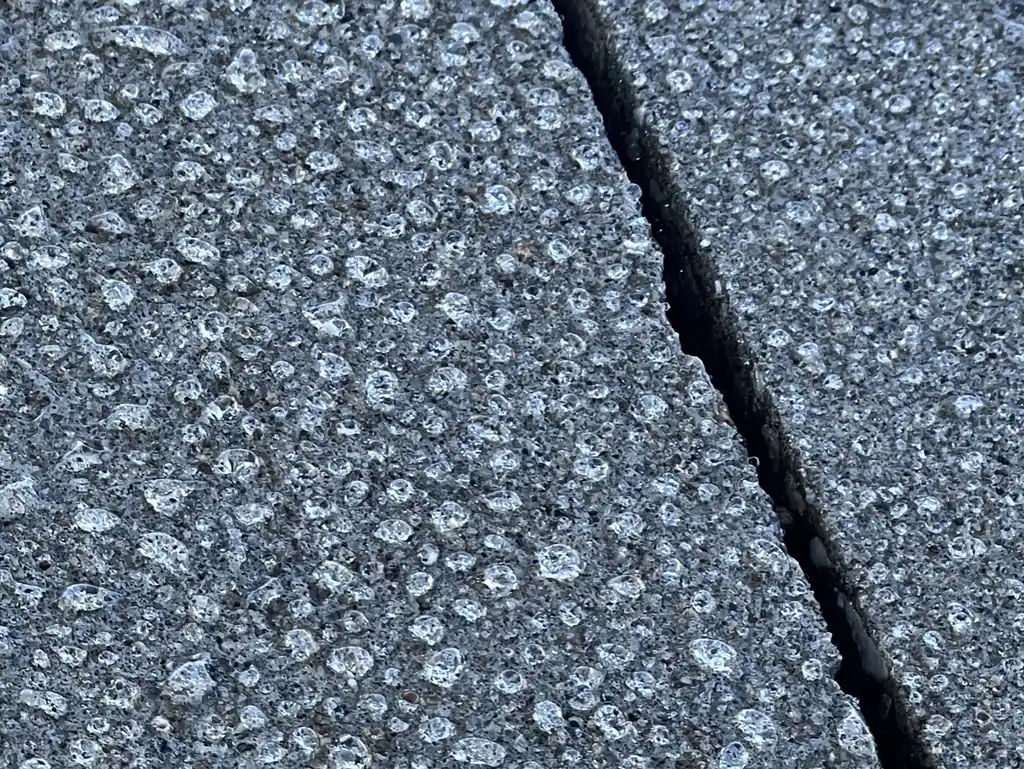
- It won’t stop a leak. If water is getting inside, the source has to be found and fixed first.
- It won’t fix cracks in the brick, the mortar or the crown. BIA says penetrating repellents seldom stop water coming through cracks wider than 0.02 inch.
- It won’t replace flashing, a chimney cap or crown work.
- It won’t bring back brick faces that have already flaked off.
- It won’t make old stains disappear. BIA warns that stains on treated brick can be hard or impossible to remove, which is one more reason we clean first.
Where it fits with the rest of the house
A chimney is masonry on a roof, so it often comes up when we look at a roof for roof protection. Brick steps, block walls and stone borders sit right next to driveways and patios, so they come up with concrete protection too. We look at all of it at once and tell you which surfaces are worth treating and which aren’t.
You probably don’t need this if…
- Your brick or mortar is cracked, crumbling or missing. Call a mason first. We can come back after.
- Water is coming into the house. Find the leak first. A clear treatment won’t find it or fix it.
- Your brick is new construction. BIA doesn’t recommend water repellents on newly built brick veneer or cavity walls.
- Your masonry is painted or already has a coating on it. Tell us, and we’ll look before suggesting anything.
- Your walls have stayed dry and sound for a long time. BIA says brickwork that was well chosen, well built and kept up doesn’t need a water repellent to resist water under normal exposure.
What happens next
Start with a free exterior evaluation. We’ll look at the chimney and the rest of your masonry, take photos, and tell you plainly whether it needs a mason, a cleaning, a treatment or nothing at all. Just had chimney work done? Tell us when, and who did it.
Call or Text Revive Exteriors at (812) 664-6222, Monday to Saturday, 9am to 5pm.
Common questions
Will sealing stop my chimney from leaking?
No. A leak means water has a path in, and that path is usually a crack, an open joint, a failed crown or cap, or bad flashing. Those need a mason or a roofer. BIA says clear water repellents can’t stop water caused by problems like poor caps or half-filled mortar joints. Once the leak is fixed, a treatment can help the masonry take on less water.
Will it change how my brick looks?
It shouldn’t. NexaNano says its treatment dries clear, keeps the natural look of the surface and won’t leave a shiny film. BIA notes that an unwanted gloss on brick can be a sign of the wrong coating or a poor application. If you’re after brick that looks wet or glossy, this isn’t the product for that, and we’ll tell you so.
Can you seal my chimney right after the mason finishes?
Not the same day. We’ll set the timing once the repair is done, and we’re happy to talk with your mason about it. BIA suggests watching repaired masonry for several months to see if water is still a problem, since repairs often fix it. If the brick is still soaking up water after that, a treatment is worth a conversation.